Structure
There are three main strains of the influenza virus, types A, B and C. Type A and B viruses are the most common causes of influenza disease symptoms and epidemic outbreaks, whilst type C has a milder disease phenotype and predominantly affects children.
Influenza Type A Virus
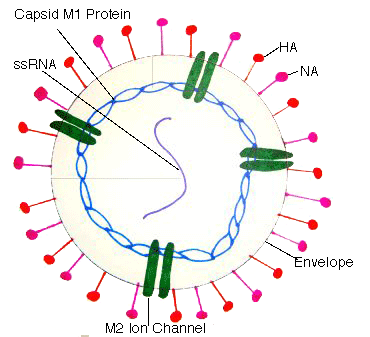
Structural Components
RNA
The influenza A viral genome is relatively simple, consisting of a single strand of RNA (ssRNA) composed of 8 negative sense RNA segments. This basic genome encodes only ten proteins which are sufficient for complete viral function. Each RNA segment associates with nucleoproteins (NPs) and a heterotrimeric RNA polymerase enzyme required for replication and transcription of the viral genome. Together the RNA, nucleoproteins and RNA polymerase constitute the viral ribonucleotide proteins.
Capsid
The capsid is a protective mechanical barrier which surrounds the viral RNA. The influenza capsid is composed of the matrix protein M1 which attaches the viral ribonucleoproteins to the viral envelope and is thought to play a role in virus assembly and nuclear export.
Envelope
The viral envelope is an outer bilayer of host derived plasma membrane which is acquired by budding off from the host cell. The virus may then modify envelope composition by encoding and inserting specific glycoproteins into the plasma membrane. Although these proteins assist viral function they can also act as epitope tags marking them as foreign RNA and alerting the innate immune system. Influenza A encodes two envelope glycoproteins, hemagglutinin (HA) and neuraminidase (NA).
Hemagglutinin
This integral membrane glycoprotein facilitates attachment of the virus to host cell receptors and eventual entry.
Neuraminidase
Another glycoprotein neuraminidase facilitates viral budding from the host cell. This is acheived by cleaving sialic acid which acts as a viral receptor on the surface of the host cell. Cleavage prevents the virions from re- attaching and clumping on the host cell plasma membrane, instead facilitating release into the systemic blood supply.
M2 Ion Channel
The envelope also contains the H+ ion channel M2, which promotes virion uncoating in the endosome by decreasing intracellular pH to create and acidic environment.
Evolution of the Viral Envelope and Antigenic Glycoproteins
The antigenic envelope is a key feature, determining the strain of virus and bares much significance in the host immune response. Viral genomes continuously change and evolve in nature in order to survive and create new strains. Two processes by which this can occur is the gradual antigenic drift of a virus and the more dangerous antigenic shift.
Antigenic drift is the process by which new viral strains emerge due to genetic evolution of the genes encoding hemagglutinin and neuraminidase. A high rate of mutation enables the influenza virus to produce multiple viral strains each differing by as little as a few amino acids. At present there are 16 known HA subtypes and 9 NA subtypes of the influenza A Virus, different sub types occurring by different combinations of the two glycoproteins. Influenza B and C viruses have similar basic structures to the type A virus but differ mainly in envelope glycoprotein compositions. Significantly glycoproteins are the main site of antibody interaction. As immune system antibodies only recognise foreign antigens previously exposed to the body, even the slightest variation of epitope is capable of inducing the flu disease phenotype in an individual previously infected by a similar strain. By using this subtle yet potent mechanism, the influenza virus is able to repetitively outrun the host's adaptive immune response making it impossible to acquire ultimate immunity against the influenza virus.
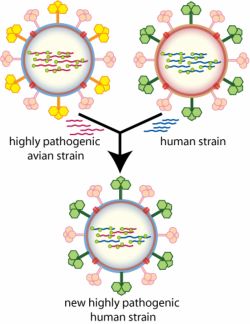
Antigenic Shift
Antigenic shift on the other hand is a rare and sudden process caused when a cell is infected with two strains of the influenza virus at the same time. A reassortment event between the RNA of both strains may cause characteristics of two separate strains to merge and create a third novel subtype. This new subtype and its unique genome will therefore encode a combination of antigenic surface glycoproteins from both strains of parent viruses, rendering the host organism's immunity bank useless. Antigenic shift usually occurs with influenza type A, the strain which can spread across species. In addition antigenic shift between influenza viruses of different species has proved to be dangerous and has been responsible for several pandemic outbreaks.